EEduGames Safety

Safety for families · Ages 7–10

Fun games.
Fewer online risks.

We removed the features that commonly expose children to unsuitable advertising, unwanted contact, spending pressure and public attention.

  • No adverts
  • No player chat
  • No stranger contact
  • No account needed
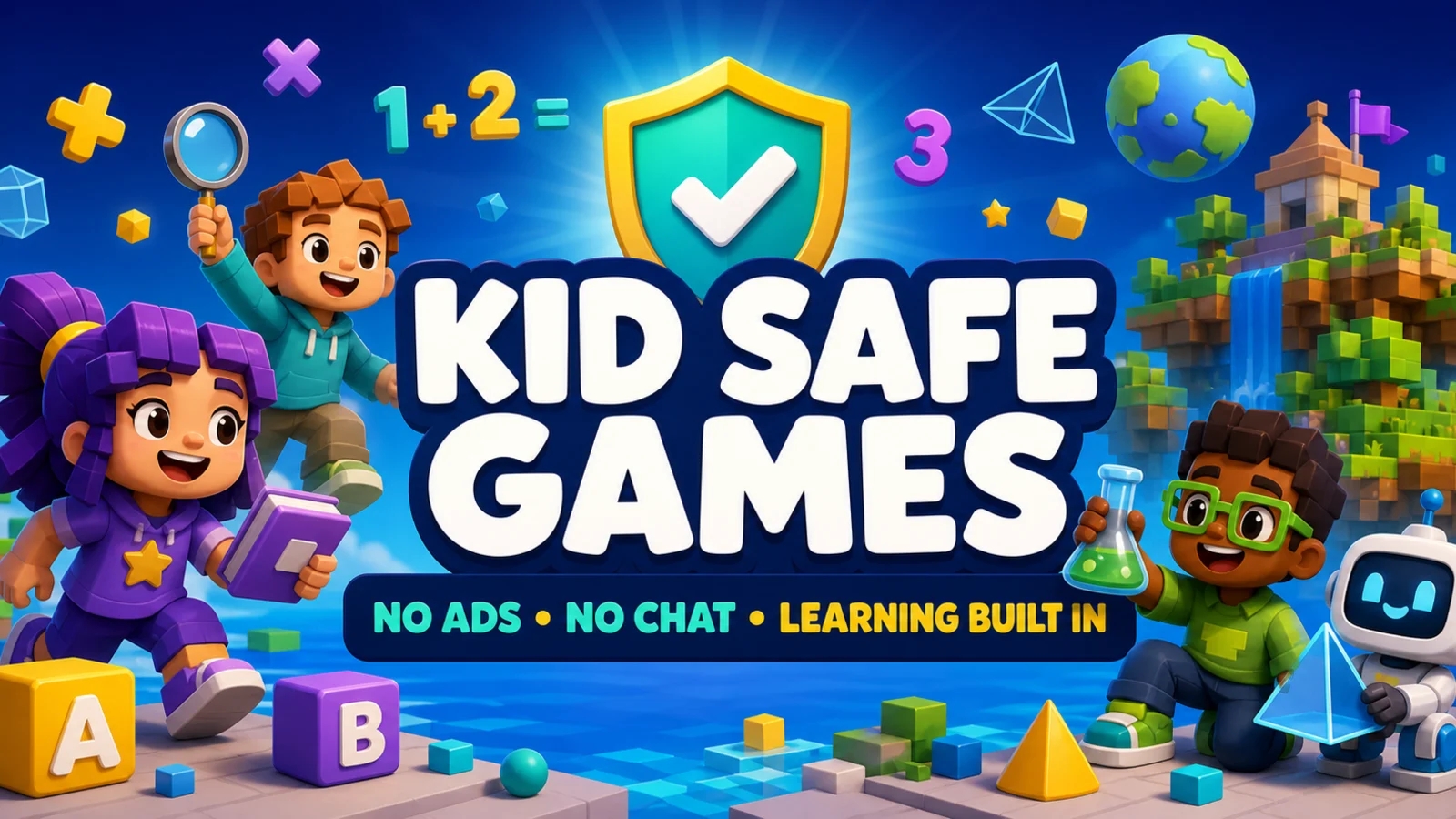
Kid Safe Games — no ads, no chat and learning built in
Play stays focused on the game and the learning.

A clear safety approach

We do not ask children to manage risks that should not be there.

No website can remove every risk a child may meet elsewhere online. EduGames reduces common risks inside our games by leaving out advertising networks, communication between players, public profiles, uploads and real-money rewards.

What we removed—and why

Safety is built into what the games do not allow.

These are product decisions, not settings a child must remember to switch on.

No adverts

No unpredictable or misleading advertising

Automated adverts can show unsuitable, frightening, misleading or highly persuasive content. They can also encourage children to click away to unfamiliar websites or sales pages.

  • No display or video adverts
  • No sponsored game placements
  • No advertising profiles or marketing trackers
  • No advert links taking children elsewhere

No chat or messages

Strangers cannot contact a child through EduGames

Open chat can create a route for bullying, scams, sexual or upsetting messages and grooming by adults pretending to be children. We do not provide that route.

  • No public or private chat
  • No direct messages or voice chat
  • No friend requests or public usernames
  • No image, video or message uploads

Curated game content

Children play what we made—not strangers’ uploads

Questions, instructions and game worlds come from the EduGames project. Players cannot publish their own words, pictures, levels or links for other children to see.

  • Age-appropriate learning language
  • No user-generated content feed
  • Playful block characters instead of realistic gore
  • Learn and Hint support without shaming

No spending pressure

Rewards are earned through play, never bought by chance

There are no checkout screens, paid upgrades or random rewards designed to make a child spend money. Collectible coins and skins stay inside the game.

  • No purchases or subscriptions
  • No loot boxes or paid random rewards
  • No adverts disguised as rewards
  • No punishment for taking a break

Private by default

A child can play without creating a public identity.

EduGames does not need a public profile to make play rewarding. Progress can stay on the device, where it supports the next game session without making the child visible to other players.

  • 01
    No account required

    Children can start without entering a name, email address or date of birth.

  • 02
    No public profile

    There is no searchable player page, follower count or public score history.

  • 03
    No contact discovery

    We do not ask for contacts, precise location, a profile photo or an advertising identifier.

  • 04
    Local progress

    Game progress and earned items can remain on the browser or device being used.

Healthy play

Exciting enough to enjoy. Easy enough to stop.

Good games do not need anxiety, public pressure or lost rewards to bring children back.

Pause at any time

Every game includes clear pause and help controls.

Natural checkpoints

Levels, missions and checkpoints create sensible moments to finish.

Retry without shame

Mistakes lead to feedback and another go—not embarrassment or a public loss.

No streak pressure

Taking a break does not remove rewards or punish a learner.

A simple family safety habit

If anything online feels wrong, stop and tell a trusted adult.

EduGames removes communication and advertising from its own games, but children still benefit from an updated browser, age-appropriate device settings and a grown-up who takes concerns seriously.

  1. Pause or close the pageA child never needs to keep playing when something feels upsetting.
  2. Tell a trusted adultEncourage children to speak up without worrying that they will be blamed.
  3. Keep personal details privateChildren should never share their full name, school, address, phone number, passwords or live location online.

Ready to play?

Safe choices around the game.
Learning inside the game.

No adverts, no public chat and no account needed.

Choose a game