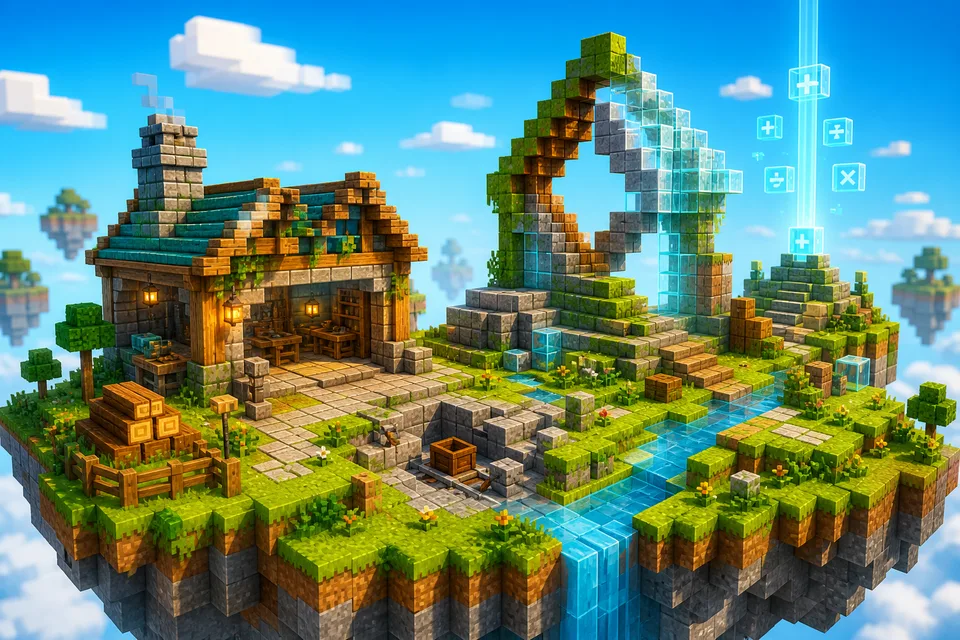
Blocksmith Worlds
Build what you know
Fractions, shape, area and number become physical. Children mine materials and build the answer block by block.
Learning through play · Ages 7–10
We start with the kinds of games children already want to play—building worlds, crossing daring bridges and racing through obstacle courses—then make learning part of the adventure.

The learning loop
Every activity connects what a child knows to something they can do inside the world.
Select Year 3, 4 or 5 and a subject so the questions suit the learner.
Explore, build, jump, collect and solve problems in a proper game world.
The question controls what happens next: a bridge, wall, build or mission.
Learn explains the idea; Hint gives a smaller nudge without simply revealing the answer.
Helpful feedback makes another attempt feel normal, then success moves the adventure on.
Learning you can play
Different styles of play give children different ways to think, practise and show what they understand.
Fractions, shape, area and number become physical. Children mine materials and build the answer block by block.
Two paths carry two answers. Choosing and jumping onto the right one connects recall with movement and consequence.
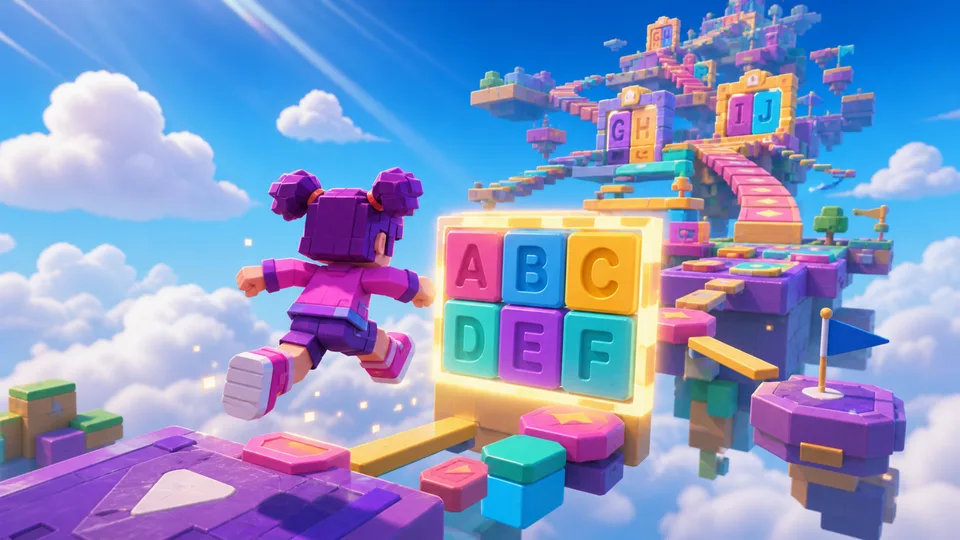
Spelling, vocabulary and punctuation challenges open the next wall in a colourful obstacle-course climb.
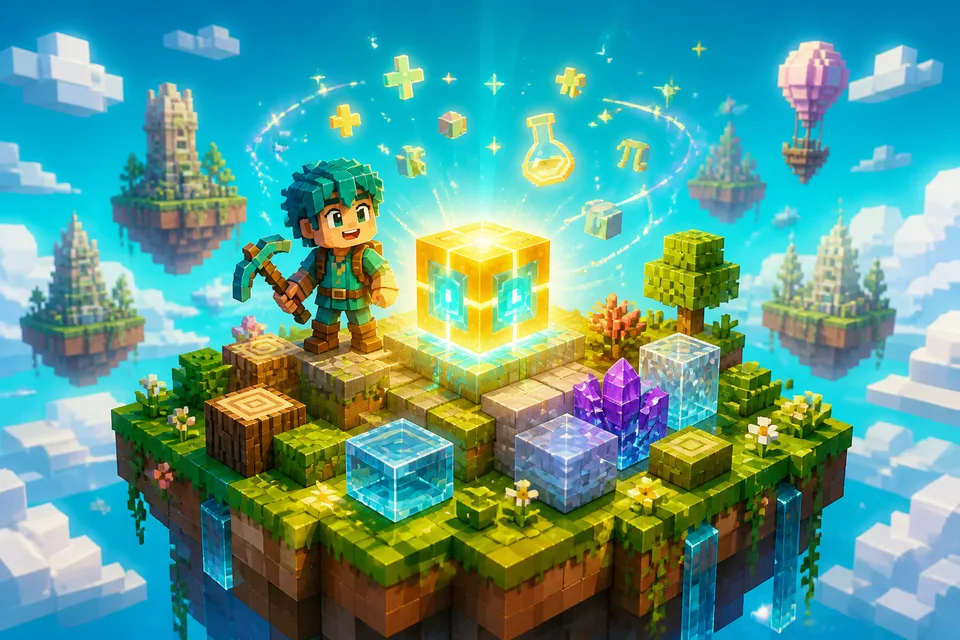
Mining and expanding a sky island creates a satisfying rhythm of play, practice and new discoveries.
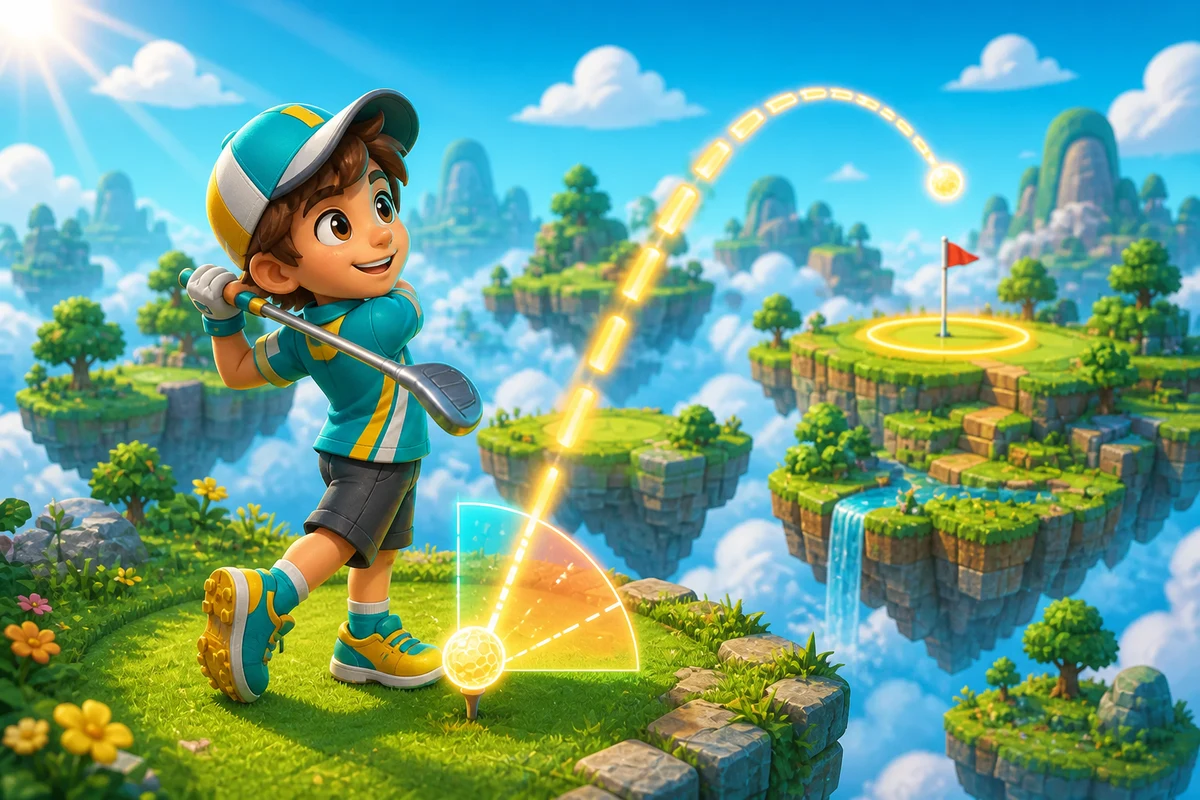
Children set an angle and speed, watch the flight, then use real measurements to reason about gravity, friction and distance.
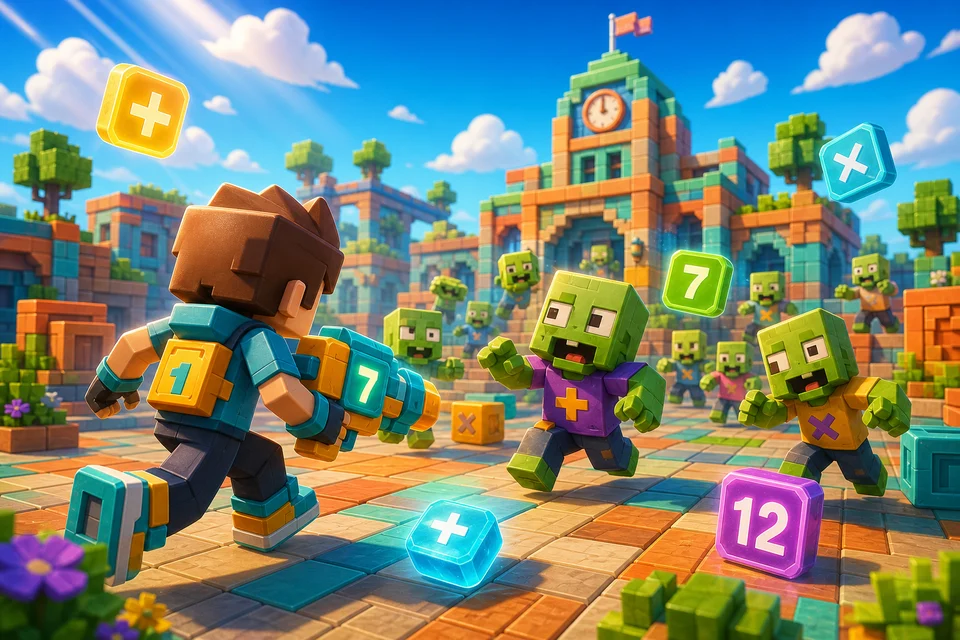
Children solve an equation, count carefully during an action-packed swarm and check their total at a safe checkpoint.
Teach before testing
Children can ask for support at the moment it matters. The explanation is matched to the exact topic, uses a fresh example and keeps the real answer for the learner to work out.
To find one fifth, split the whole amount into 5 equal groups. One of those groups is the wood part.
Worked example: one fifth of 15 means sharing 15 into 5 equal groups.Our learning philosophy
Good learning games respect both the child and the subject.
Children make, move, decide and test ideas instead of only tapping through questions.
The next step should feel achievable, with help always available and never forced.
A wrong answer becomes a chance to understand, retry and keep going without embarrassment.
A deep question bank and changing game situations reduce dull repetition while revisiting important skills.
English, maths and science are tailored for Years 3, 4 and 5, informed by UK curriculum research.
Rewards celebrate effort and progress. They never depend on spending, adverts or pressure to return.
Our promise to families
EduGames is designed as a calm, private place to play and learn.
See learning in action
Every adventure is free to try, with no adverts and no public chat.
Choose a game